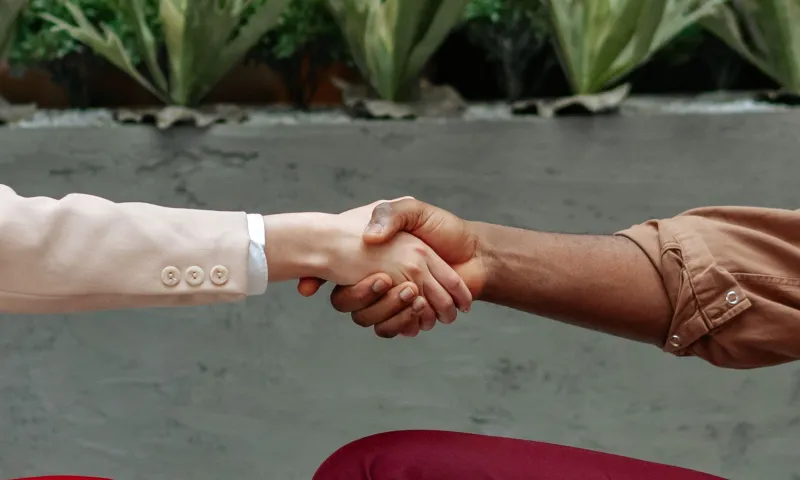
Nobody Read Your Partnership Press Release. Here's What to Do Instead.

You did everything right. You found a great partner, signed the agreement, shook hands, maybe even ordered new business cards. Then you sat down and wrote the classic partnership press release: 'XYZ Bakery and ABC Coffee Roasters are proud to announce an exciting strategic partnership...'
And then... nothing. Not a single reply from the local paper. One view on your news page (probably your mom).
Here's the hard truth: nobody — not reporters, not your chamber, not your customers — has cared about a partnership announcement press release in a decade. It reads like a corporate birthday party invitation. But partnerships themselves are still gold. The problem isn't the news; it's the wrapper.
Why the Standard Press Release Flops
A traditional announcement is about you. It describes an internal arrangement — who partners with whom, who's 'excited,' who's 'honored.' Local editors and newsletter curators get dozens of these a week, and they all sound identical.
What they're looking for is a story: something their readers can use, attend, or argue about. A partnership is only newsworthy when it produces something visible — an event, a result, a discount, a data point.
So stop announcing the partnership. Announce what the partnership does.
Three Formats That Actually Get Picked Up
1. The co-hosted event. 'Two businesses team up' is boring. 'Two businesses are hosting a free small-business tax night at the brewery on Main Street' is a calendar listing, a photo op, and a community story in one. Local papers are starving for event coverage, especially anything with a charity angle or free food.
2. The joint case study. Did your partnership already produce a result? 'How a landscaper and a patio builder cut quote-to-job time in half' is a pitch industry newsletters will actually run, because it teaches their readers something. Data beats adjectives, every time.
3. The neighborhood takeover. A week of cross-promotion — each business taking over the other's Instagram, a shared sidewalk chalkboard campaign, a 'buy at one, save at the other' punch card — gives local social media pages and 'shop local' groups something to share. This is the format most small businesses skip, and it's the cheapest.
Your 30-Day Rollout Plan
- Days 1–7: Build the artifact. Pick one deliverable: the event date, the case study numbers, or the takeover week. If you can't name a concrete deliverable, you don't have a story yet — you have a handshake.
- Days 8–14: Pitch it as a story, not a release. Email local reporters and editors with a two-paragraph pitch: what's happening, when, why readers should care. Attach one good photo offer ('we can get you photos of the event'). Keep the subject line human: 'Two Maple Street businesses hosting free tax night Oct 12.'
- Days 15–21: Work the chamber and industry channels. Your chamber of commerce newsletter, BNI chapter, and trade association lists are far easier placements than the paper. Offer a short write-up with a quote from each partner — they'll often run it nearly verbatim.
- Days 22–30: Publish and cross-post. Both businesses post the story on their sites, swap social takeovers, and email their lists. The point of coverage is that it feeds your own channels, not the other way around.
A Pitch Template You Can Steal
Subject: Free tax night at [Brewery], Oct 12 — [Town] businesses teaming up
Hi [Name] — I run [Business A] and I've partnered with [Business B] to host a free small-business tax prep night on October 12 at [location], open to any [Town] business owner. Last year's version drew 40 attendees; this year we're expecting more and partnering with [local org]. Happy to send photos and a couple of attendee quotes after. Want details?
Notice what's missing: the word 'partnership,' the phrase 'strategic alliance,' and any sentence containing the word 'excited.' Reporters can feel the difference.
The Bottom Line
A partnership announcement doesn't earn coverage. A partnership output does. Build something the community can attend, learn from, or share, then pitch that. The alliance becomes the backstory — and the story does your marketing for free.